What Is a Job Fit Score? How Match Scoring Works (and How to Use It Before You Apply)
Corporate openings now draw hundreds of applicants each. Here is how fit scoring works, what it can and cannot predict, and how to raise your score before you hit submit.
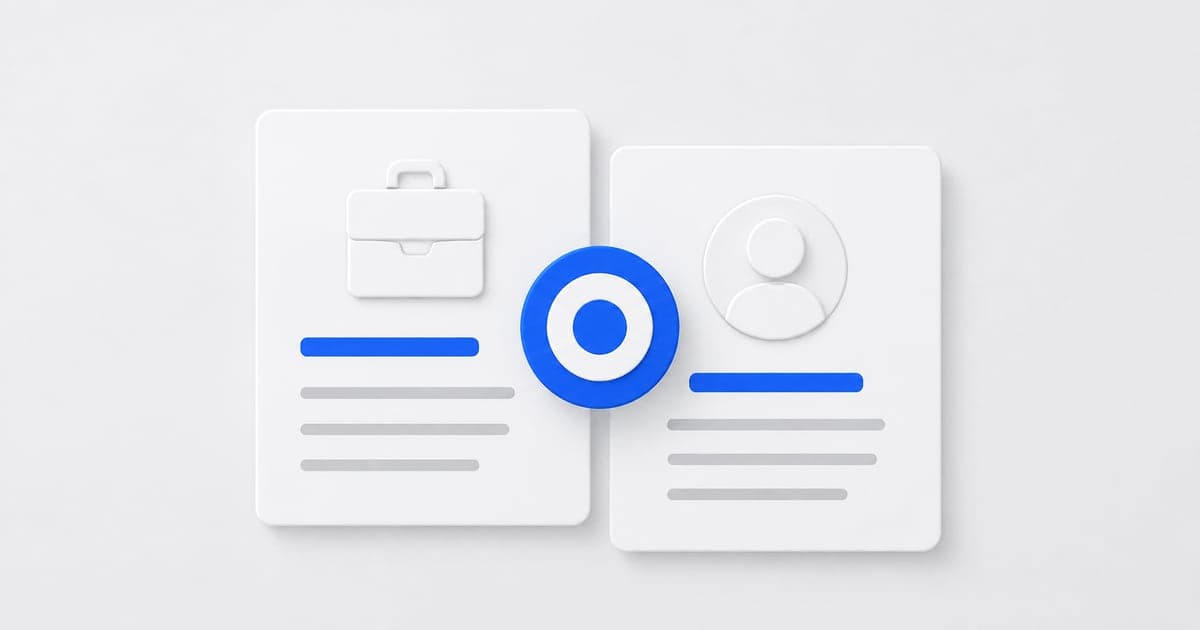
A job fit scoreis a number from 0–100 that estimates how well your experience matches one specific job posting before you apply. It compares your skills, experience depth, and practical preferences against the posting's requirements, producing sub-scores plus strengths and gaps. ElevateAI generates a fit score for every saved job so applicants spend time on applications that can realistically win interviews.
What is a job fit score?
A job fit score measures the overlap between what one specific employer wants and what you actually offer: your skills, your years and depth of experience, and practical factors like location, seniority, or work setup. It is calculated per posting — the same person can score 85 for one role and 40 for another at the same company.
Unlike a generic "resume strength" grade, a fit score compares two things: your career history on one side, and the requirements, language, and constraints inside one job description on the other.
How does a job fit score actually work?
Fit scoring tools generally follow the same shape:
- 1. Your side. What you bring: roles, tenure, skills, and achievements with numbers.
- 2. The job's side. What the posting asks for: required vs preferred qualifications, seniority signals, keywords, and constraints.
- 3. The result. An overall 0–100 number with separate reads on skills, experience, and preferences, plus strengths and gaps.
ElevateAI's fit scoring works like this in practice: save a job by pasting its URL or description, and you get an overall match plus strengths, gaps, and a short note on how to position yourself if you apply. It compares against your career memory rather than a single uploaded document, so the score reflects your actual history — not just how well one file was formatted.
Why applying blind stopped working
Application volume has exploded while recruiter capacity has not. The data from ATS platforms tells one story: more applicants per seat, fewer interviews per applicant.
| Metric | Figure | Source |
|---|---|---|
| Applicants per corporate job (2025) | >300, tripled since 2021 | Ashby Talent Trends 2026 |
| Applicants per hire (2025) | 180 avg; ~3% invited to interview | CareerPlug 2025 |
| Applications per offer (global) | ~73 : 1 | SmartRecruiters 2025 |
| Initial resume screen time | ~7.4 seconds | Ladders eye-tracking study |
The math is brutal: if 300 people apply and 3 get interviews, small differences in match decide everything. Fit scoring moves those decisions to before you apply — where they cost minutes instead of weeks.
Job fit score vs ATS score (the short version)
An ATS score measures technical parseability: correct sections, standard headings, readable file format, keyword presence. A high ATS score gets you processed correctly.
A fit score predicts human shortlisting: do you meet the bar, are you plausible on seniority and logistics, and is there an angle worth interviewing?
You need both, in this order: first make sure the document parses (see what an ATS resume checker does), then make sure the match is real. Fit scoring is the second, harder question — and the one applicants usually skip.
How to use a fit score to decide whether to apply
Use thresholds, not vibes. The bands below are a practical rule of thumb from career guides — not official ElevateAI calibration, and not comparable to another tool's 0–100. What matters is having a consistent rule for where your limited tailored applications go.
| Score | Meaning | Action |
|---|---|---|
| 80–100 | Strong match | Apply within 48 hours, fully tailored |
| 60–79 | Realistic stretch | Apply only if top requirements are met; tailor hard |
| 40–59 | Weak match | Selective only — referral path or near-miss postings |
| Below 40 | Mismatch | Skip — protect your weekly quota |
That last row matters most. With 50 scored jobs per month on ElevateAI's Job Seeker plan, declining bad-match applications is a feature, not a loss — every declined posting frees a slot for one you could actually win.
How to raise your fit score before applying
A fit score is not fixed — it moves when your materials move. Before submitting any application that scored 60–79:
- 1. Mirror must-have language honestly.If the posting says "stakeholder management" and you did that, use their phrase backed by your evidence.
- 2. Lead bullets with outcomes the JD emphasizes. If they stress reliability, surface uptime and incident stories first.
- 3. Close cheap gaps.Add tools you genuinely know but didn't list; cut irrelevant material that dilutes the match.
- 4. Fix preference-level mismatches where possible — location flexibility, start dates, remote setup — or address them in the cover letter.
- 5. Re-score. Aim for a meaningfully higher number than your first pass before you submit.
Full method with examples: how to tailor a resume to a job description.
What fit scores can't tell you
Be honest about limits: no score sees internal candidates, referral advantages, budget changes, or how your portfolio reads. A fit score is decision support for your applications — not a guarantee, and never something recruiters see.
The working rule
Treat anything above ~75 as "worth doing properly," not as permission to auto-pilot. The score gets you into the game; tailoring wins it.
Frequently asked questions
What is a good job fit score?
As a rule of thumb: above 80 usually means a strong match worth applying to quickly with a tailored resume. Scores of 60–79 are realistic stretches — apply only if the top requirements are met and you tailor hard. Below 40–50 is usually not worth a tailored application. These bands are guidance, not official cutoffs — consistency matters more than the exact numbers.
Do recruiters see my fit score?
No. A job fit score is private decision support for the applicant. Recruiters only ever see your final application documents — never the score itself.
Is a job fit score the same as an ATS check?
No. An ATS check asks whether software can correctly read and parse your resume. A fit score asks whether you actually match this specific posting: skills, experience depth, and preferences like location or seniority. You need both, but they answer different questions.
Can I check a job fit score for free?
Yes. ElevateAI's free tier includes one AI-scored saved job: paste a job URL or description and get a 0–100 fit score with strengths, gaps, and a recommended angle before deciding to apply.
How accurate is a job fit score?
It is designed to surface obvious mismatches — missing must-have skills, wrong seniority band — and to help you compare saved jobs side by side. It cannot see internal candidates, referral advantages, or budget changes. Treat it as a decision aid, not a guarantee of interviews.
Related guides
- → Job Fit Score vs ATS Score
- → How to Tailor a Resume to a Job Description
- → What Is an ATS Resume Checker?
- → AI Job Application Tracker Guide
- → Who ElevateAI is for
Check any job's fit score before you apply
Paste a job posting and ElevateAI returns a 0–100 fit score with strengths, gaps, and a recommended angle — free tier includes AI-scored saved jobs.
Score my first job free